Plant growth and reproduction are driven by photosynthetically active radiation (PAR), defined as wavelengths between 400 and 700 nanometers. This interval is often separated into three distinct “color” bands for plant research. Modifying the intensity of red, blue, green wavelengths, along with additional near-UV (380-400 nm) and far-red (700-780 nm) bands, can influence a variety of plant characteristics, such as growth rate, chemical composition, and more.

The precision linear image sensor of the LI-180 records intensity and composition of these five wavebands at the single-nanometer level with a single click. Optimize the composition of your supplemental lighting and track your spectrometer data over time for long-term validation of your lights and lighting strategy. Monitor degradation of your custom lighting system, plan for seasonal changes or upgrades, and design species-specific light recipes using the LI-180 Spectrometer.

Plant growth and reproduction are driven by photosynthetically active radiation (PAR), defined as wavelengths between 400 and 700 nanometers. This interval is often separated into three distinct “color” bands for plant research. Modifying the intensity of red, blue, green wavelengths, along with additional near-UV (380-400 nm) and far-red (700-780 nm) bands, can influence a variety of plant characteristics, such as growth rate, chemical composition, and more.

The precision linear image sensor of the LI-180 records intensity and composition of these five wavebands at the single-nanometer level with a single click. Optimize the composition of your supplemental lighting and track your spectrometer data over time for long-term validation of your lights and lighting strategy. Monitor degradation of your custom lighting system, plan for seasonal changes or upgrades, and design species-specific light recipes using the LI-180 Spectrometer.

LI-COR LI-180 Spectrometer


Why Measure Spectra?

Gain enhanced control over desired plant characteristics by accurately measuring and optimizing the composition of your supplemental light1,2.

timer icon

Shorten Production Time

Modifying specific wavebands can accelerate growth, increase total fruit and vegetable yield, influence flowering, and increase maximum harvestable biomass of leafy greens and herbs.

plant growth icon

Improve Yield Quality

Strategically modifying the spectral composition of your lights can improve the taste, nutrient content, and chemical composition of your fruits, vegetables, leafy greens, and herbs. Spectral changes can also affect stalk, leaf, and flower growth and distribution for ornamental plants.

leaf disease icon

Enhance Disease Resistance

Increasing specific wavelengths of light can inhibit the growth of, and minimize the damage from, mildew and other diseases common among greenhouse plants.

Instant Insights

Measure real-time changes from spectral manipulation, height adjustment, and plant positioning. In one click, the LI-180 records dozens of variables including PAR (as color-specific photosynthetic photon flux density (PPFD)), photon flux density (PFD), irradiance (W/m2), and more. Select a measurement to see details, such as ratios of red to blue or red to far-red intensity.
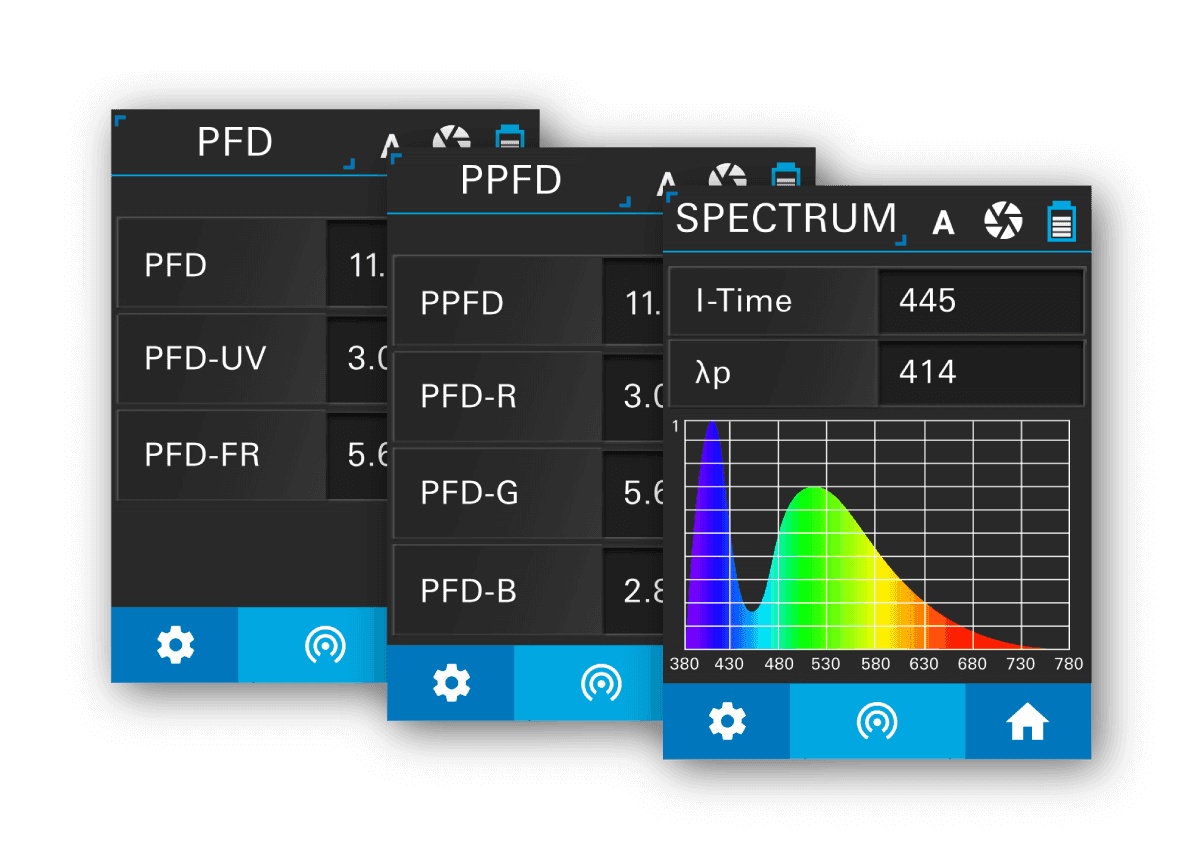
LI-180 screens

Actionable Results

Compare the spectra of your lighting to one of multiple reference spectra. Reference spectra are based on pigments important for photosynthesis and morphology, such as chlorophyll a or beta carotene. Then adjust your lighting strategy to better match the pigment peaks for species-specific responses throughout your greenhouse.
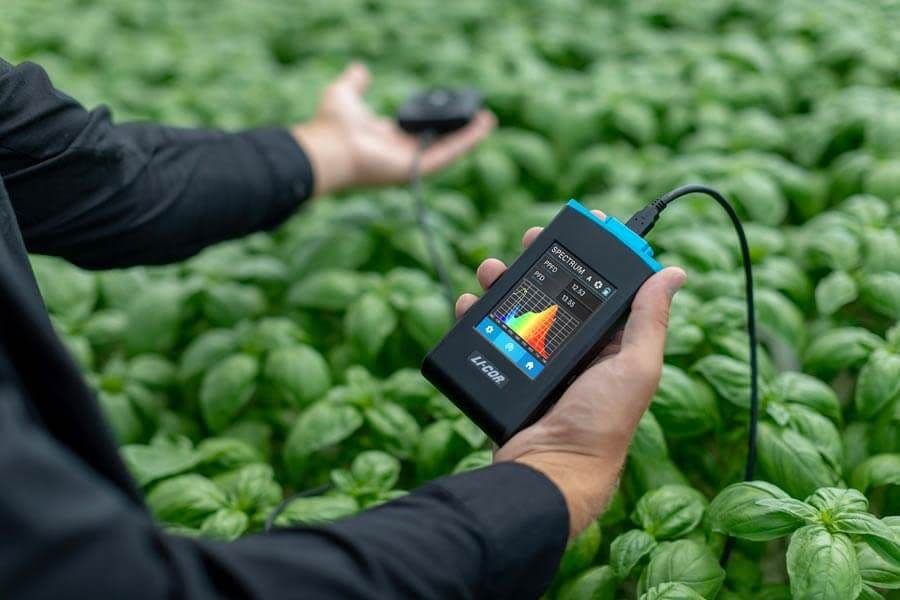
LI-180 spectrometer making a measurement

Superior Portability

Measure spectral output from any angle in and around your plants to find optimal spacing and height of supplemental lighting. The full capability of the LI-180 is within a compact, lightweight design that fits in the palm of your hand. Save your data to a high-capacity SD card or transfer data files via email from the mobile application.
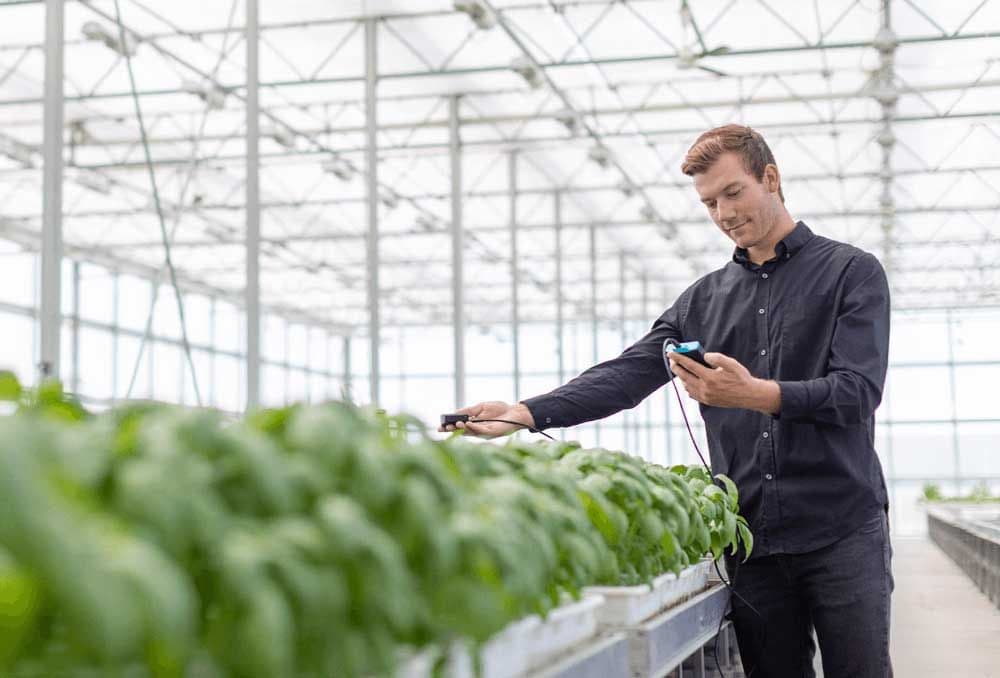
LI-180 Spectrometer portability

Custom Experience

Measure specific wavebands of interest and view the results in tabular and graphical outputs immediately after capture. Create custom wavebands and ratios to focus on the light ranges you want. Determine which bands of light have the highest intensity from your lighting strategy.
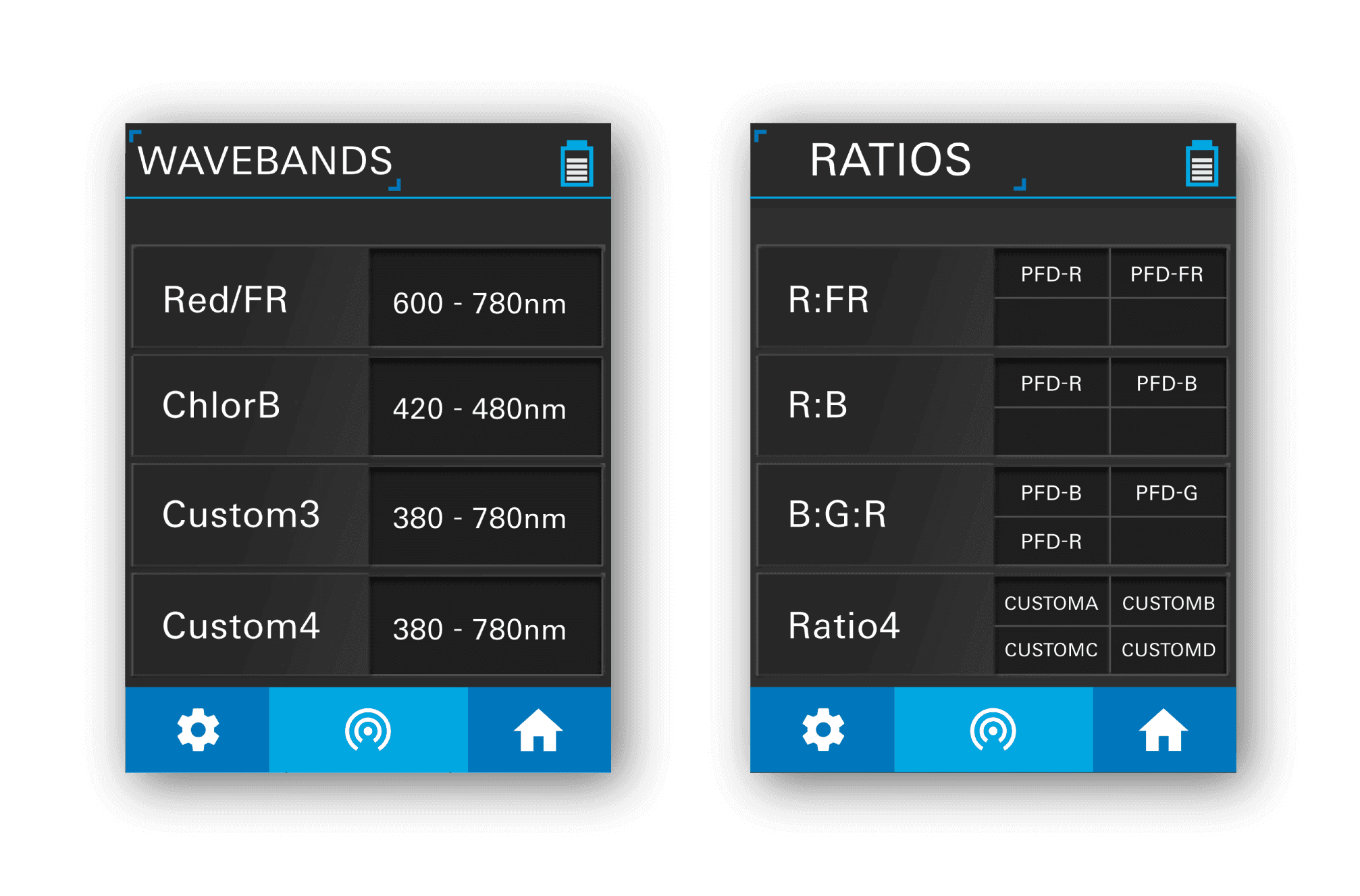
LI-180 custom wavebands and ratios

Reliable Support

LI-COR support team members are experienced and knowledgeable with diverse backgrounds in horticulture, plant physiology, botany, and other fields. Our team is readily available to support you in the use and care of LI-COR instruments.

For more information, contact us.

Brochures

Light Measurement

Light Measurement

Light Measurement Solutions for Greenhouse Management

Light Measurement Solutions for Greenhouse Management

LI-1500 Light Sensor Logger

LI-1500 Light Sensor Logger

Prinicples of Radiation Measurement

Prinicples of Radiation Measurement

Field guide to instruments for the earth sciences

Field guide to instruments for the earth sciences

Related Products

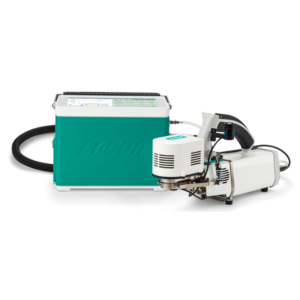
The LI-8250 acts as a single point of access to interact with and control a LI-COR gas analyzer and up to 36 chambers or flasks.
The LI-550 reports wind speed, direction, temperature, humidity, pressure, tilt, and compass data. Its size and weight make it perfect for many UAS/UAV.
The LI-7810 CH4/CO2/H2O Trace Gas Analyzer offers high performance methane measurements in a durable, portable design. This makes the LI-7810 a great fit for survey or long-term measurements of soil C
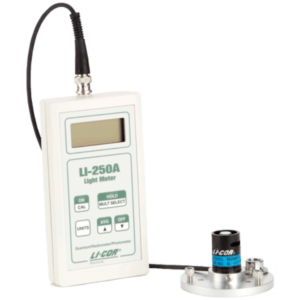
The LI-1500 allows for simple configuration of automated sampling to compute daily light integral (DLI) from PAR readings captured by LI-COR quantum sensors.
The LI-7500DS is designed for high-speed CO2 and water vapor measurements in ambient air. Lower power and maintenance requirements make it ideal for field deployments.
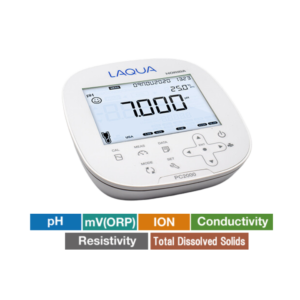
Handheld water quality meters that measure pH, conductivity, resistivity, salinity, TDS and DO. Waterproof, dust proof, eco-friendly, shock and scratch resistant and built for hands-free testing.
Some CO2 sensors are too simple. Other CO2 analyzers are costly and complex.
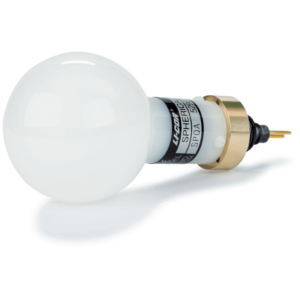
The LI-193 Spherical Quantum Sensor measures PAR in air or underwater from all directions at depths up to 350 meters. This sensor is useful for studies of phytoplankton, which uses radiation from …

Product added to Quote list ✔

failure analysis, material characterization, and metrology equipment

Subscribe to newsletter

Sign up for our newsletter to get updates on promos, seminars, events, products, application notes and more.

Inquire for this Product

LI-180
Spectrometer
LI-180
Spectrometer