Climate change has become one of the most pressing global challenges, increasing the need for accurate environmental monitoring and informed decision-making. Greenhouse gases (GHGs), particularly carbon dioxide (CO₂) and methane (CH₄), play a significant role in regulating the Earth’s climate. While these gases occur naturally, human activities such as agriculture, energy production, transportation, and land-use changes have significantly increased their concentrations in the atmosphere.
Understanding where greenhouse gases originate, how they move through ecosystems, and how they change over time is essential for developing effective climate solutions. This is why greenhouse gas monitoring has become a critical component of environmental research, helping scientists quantify emissions, evaluate carbon storage, and assess the effectiveness of sustainability initiatives.
Modern analytical instruments enable researchers to collect highly accurate greenhouse gas measurements in laboratories, agricultural fields, forests, wetlands, and industrial sites. These data support scientific research, environmental policy, and sustainable land management practices around the world.
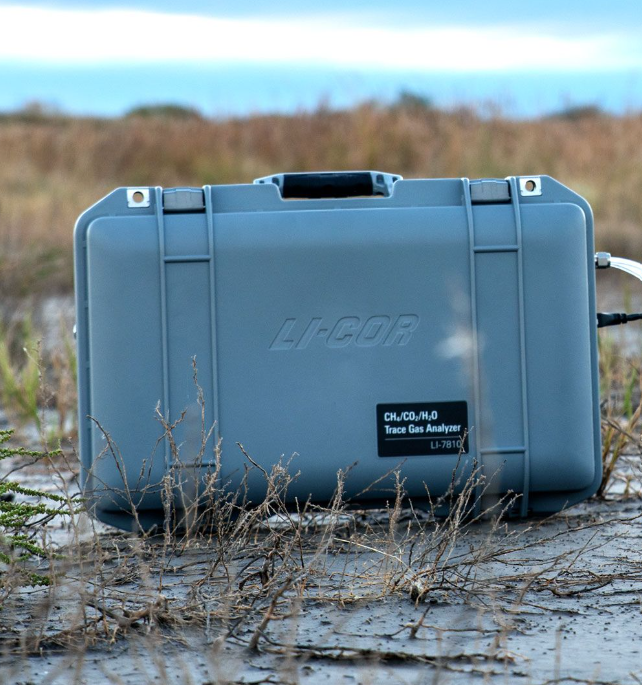
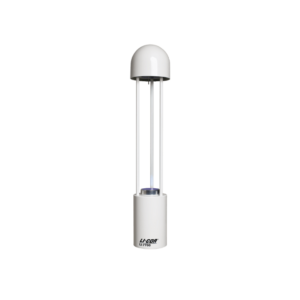
The LI-COR LI-7810 Trace Gas Analyzer measures methane (CH₄), carbon dioxide (CO₂), and water vapor (H₂O) with high precision, supporting greenhouse gas research in both field and laboratory environments.
Understanding Greenhouse Gases
Greenhouse gases are atmospheric gases that trap heat, helping regulate the Earth’s temperature. While this natural greenhouse effect is essential for life, increased concentrations of greenhouse gases enhance heat retention, contributing to global warming and climate change.
The most commonly monitored greenhouse gases include:
- Carbon dioxide (CO₂): Produced through fossil fuel combustion, deforestation, and natural biological processes. It is the largest contributor to long-term climate change due to its abundance and persistence in the atmosphere.
- Methane (CH₄): Released from wetlands, livestock, rice cultivation, landfills, and oil and gas operations. Although present in smaller quantities than CO₂, methane has a much higher warming potential over a shorter time period.
- Water vapor (H₂O): The most abundant greenhouse gas, which influences weather patterns and acts as a climate feedback rather than a primary driver of human-caused climate change.
Monitoring these gases allows scientists to understand how ecosystems exchange carbon with the atmosphere and how different human activities influence greenhouse gas emissions.
Why Greenhouse Gas Monitoring Matters
Accurate greenhouse gas measurements provide valuable information for researchers, policymakers, and industries working to reduce environmental impacts. By continuously monitoring greenhouse gas concentrations, organizations can identify emission sources, evaluate mitigation strategies, and improve environmental management.
Greenhouse gas monitoring supports:
- Climate change research
- Carbon sequestration studies
- Sustainable agriculture
- Wetland and peatland restoration
- Forest ecosystem monitoring
- Livestock and agricultural emissions research
- Landfill and waste management
- Industrial emissions assessment
- Carbon accounting and reporting
Reliable monitoring also helps governments and organizations meet sustainability goals and comply with environmental regulations while providing scientific data to support long-term climate policies.
Greenhouse Gas Monitoring in Sustainable Agriculture
Agriculture plays a dual role in climate change—it is both affected by changing environmental conditions and contributes to greenhouse gas emissions. Farming activities such as fertilizer application, livestock production, and soil management can influence emissions of methane and carbon dioxide.
By monitoring greenhouse gases directly in agricultural fields, researchers can better understand how different farming practices affect emissions and soil carbon storage. This information supports the development of sustainable farming techniques, including improved irrigation, optimized fertilizer use, conservation tillage, and better livestock management.
Greenhouse gas monitoring also helps evaluate regenerative agriculture practices designed to increase soil health while reducing emissions. Accurate measurements enable farmers, researchers, and policymakers to make science-based decisions that balance agricultural productivity with environmental stewardship.
How the LI-COR LI-7810 Supports Greenhouse Gas Research
To meet the growing demand for reliable greenhouse gas measurements, researchers require instruments capable of delivering high sensitivity, stability, and portability. The LI-COR LI-7810 Trace Gas Analyzer is designed to simultaneously measure methane (CH₄), carbon dioxide (CO₂), and water vapor (H₂O), making it well suited for environmental and agricultural research.
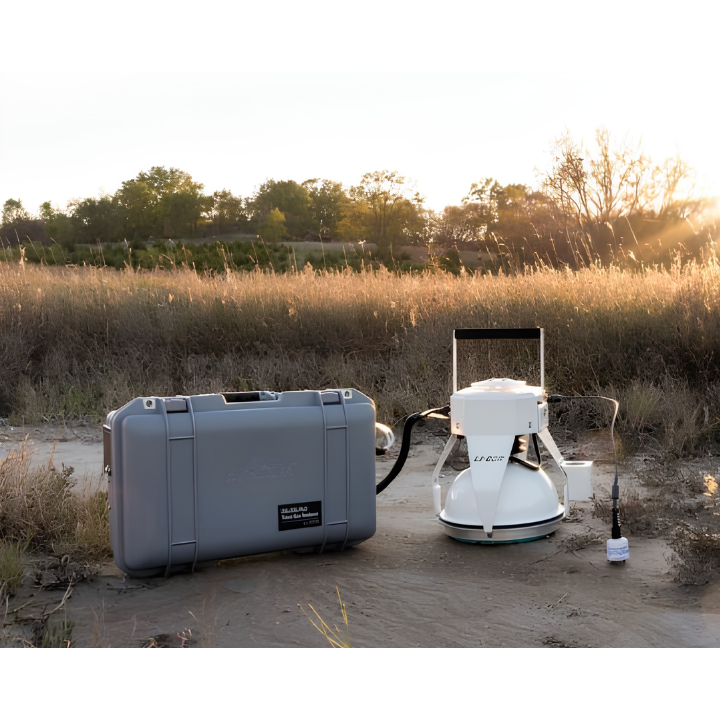
Using Optical Feedback–Cavity Enhanced Absorption Spectroscopy (OF-CEAS), the LI-7810 provides precise trace gas measurements with excellent long-term stability. Its rugged design allows deployment in remote field locations, while compatibility with soil flux chambers and automated monitoring systems supports continuous greenhouse gas measurements across a wide range of ecosystems.
These capabilities enable scientists to study methane emissions from wetlands, monitor agricultural greenhouse gases, investigate carbon cycling, and support climate research with confidence.
LI-COR Biosciences. (n.d.). LI-7810 CH₄/CO₂/H₂O Trace Gas Analyzer. LI-COR Environmental. https://www.licor.com/products/trace-gas/LI-7810
LI-COR Biosciences. (n.d.). Agriculture applications. LI-COR Environmental. https://www.licor.com/env/applications/agriculture/
Intergovernmental Panel on Climate Change. (2023). Climate Change 2023: Synthesis Report. https://www.ipcc.ch/report/ar6/syr/