

ASXPRESS Plus Advantages
Building on advanced automation technology, the ASXPRESS Plus significantly streamlines laboratory workflows by reducing sample run times across all key operations—from autosampler movement to uptake, stabilization, and rinse operations. The system’s innovative design enables multiple functions to occur simultaneously, delivering up to five times more sample throughput compared to conventional systems. When coupled with a compatible autosampler, it not only enhances efficiency but also reduces operational costs associated with argon consumption, power usage, ICP-OES/ICP-MS components, and system maintenance.
Rapid Sample Introduction
The ASXpress plus Rapid Sample Introduction Accessory reduces the time required for autosampler movement, sample uptake, stabilization, and rinse operations, thereby reducing sample run times significantly.
- The result: More sample throughput in less time. This accessory’s design allows multiple functions to occur simultaneously. A high-speed vacuum pump loads sample and flushes the sample uptake path substantially faster than a conventional peristaltic pump.
Revolutionize ICP-OES and ICP-MS analysis workflows
- Increase sample throughput
- Reduce sample delivery, stabilization and washout times
- Reduce sample waste
- Lower argon consumption
- Reduce sample matrix exposure on ICP-AES / ICP-MS hardware
- Eliminate sample memory effects from peristaltic pump tubing
- Available in white or grey to match your system
Sample Injection Features
Increase Throughput
- Gain more sample throughput in less time by optimizing sample introduction
- Virtually eliminate stabilization time by removing the need for “fast pumping,” improving plasma stability
Reduce Maintenance
- Extend the service life of ICP-AES/ICP-MS components such as nebulizers, spray chambers, and sample cones by reducing their exposure to the sample matrix
Cost-Effective
- Minimize sample consumption
- Reduce laboratory costs associated with argon and power consumption, peristaltic pump tubing replacement, and maintenance
Simple Operation
- Easy set-up with minimal modification to the analysis method
- No additional complex software is required; all system parameters are stored in the system’s on-board processor
Data Quality
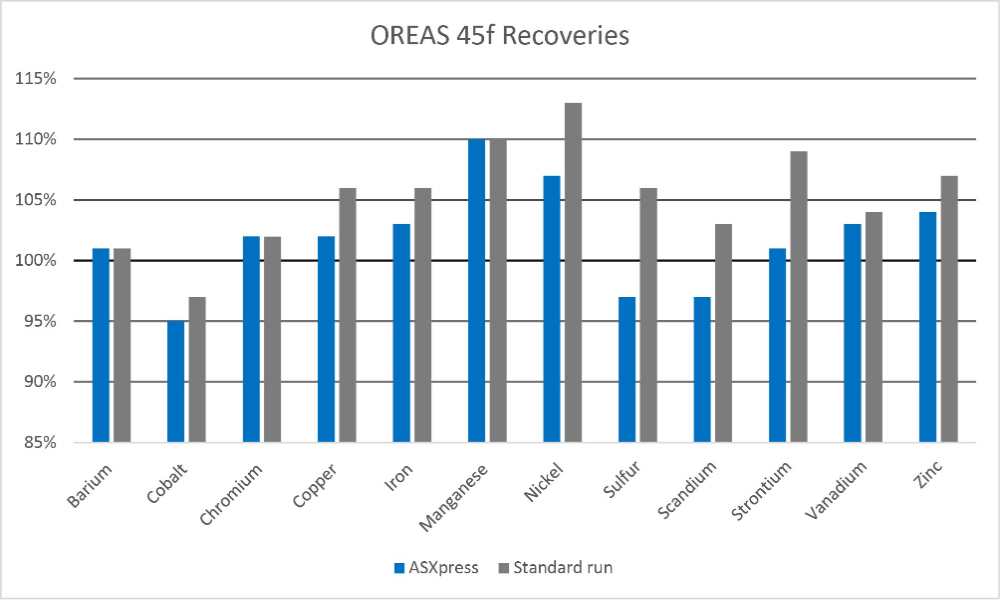
As part of a mining sample application, the geological certified reference material (CRM) OREAS 45f was prepared and run by a standard sample introduction setup and the ASXpress® Plus using ICP-OES detection. Across 12 elements the average per cent recovery is very comparable, at 102% with the ASXpress® Plus and 105% with the standard setup.
Timing
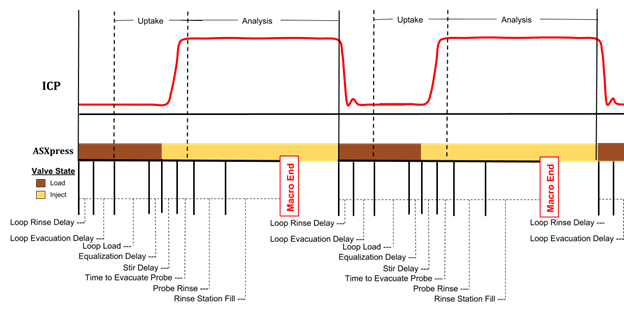
The ASXpress® Plus increases ICP-OES and ICP-MS sample throughput by reducing sample input, stabilization, and rinse times without affecting actual analyte measurement times. Note that tasks such as autosampler probe evacuation, probe rinse, and rinse station refill occur simultaneously with the sample measurement.
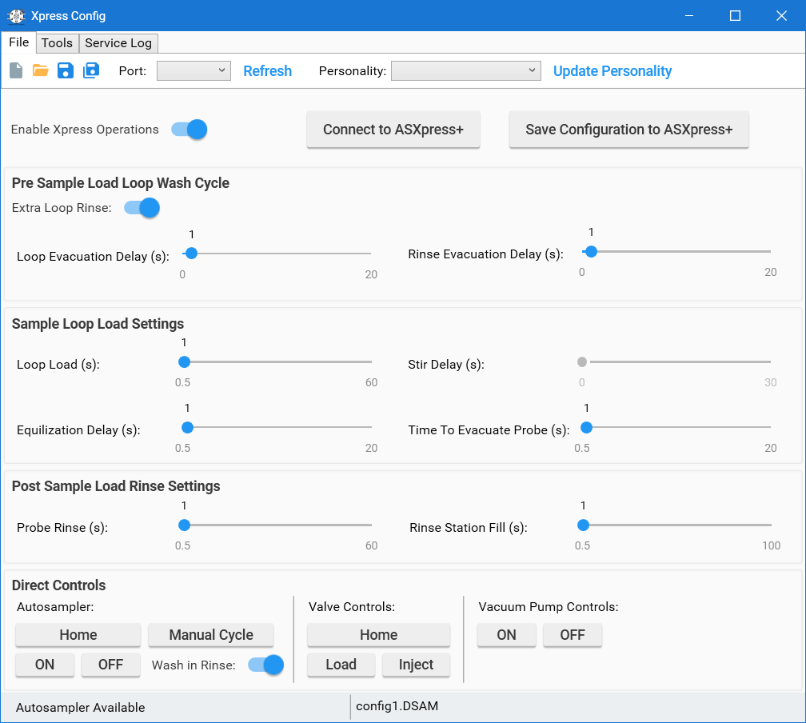
Xpress Configuration Tool
The Xpress Configuration Tool is a simple, one-screen interface to configure the ASXpress® Plus accessory and autosampler, as well as providing access to manual functions of the ASXpress® Plus and autosampler.
How Sample Injection Works
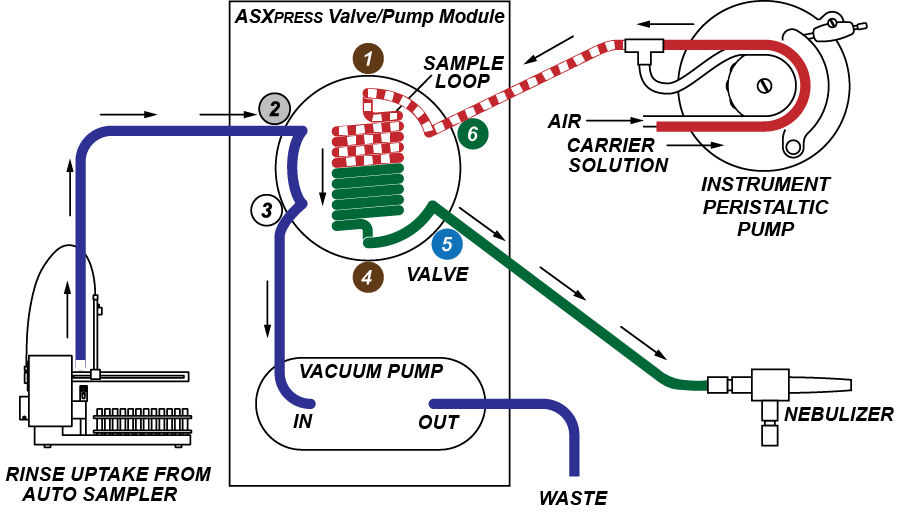
The ASXpress® Plus Rapid Sample Introduction System increases sample throughput for ICP-OES and ICP-MS by reducing sample loading, signal stabilization and sample washout times. Using proven technology, the ASXpress® Plus combines a metal-free, 6-port injection valve and inert, high-speed vacuum pump to rapidly load the sample loop prior to sample introduction. The design of the ASXpress® Plus facilitates rapid rinsing of the sample probe while simultaneously injecting sample into the ICP-OES or ICP-MS nebulizer. The air-segment stream washout technology effectively cleans liquid flow paths more completely and in less time. Benefits include increased sample throughput, reduced operation costs, and less ICP-OES and ICP-MS maintenance. (See depictions and videos below.)
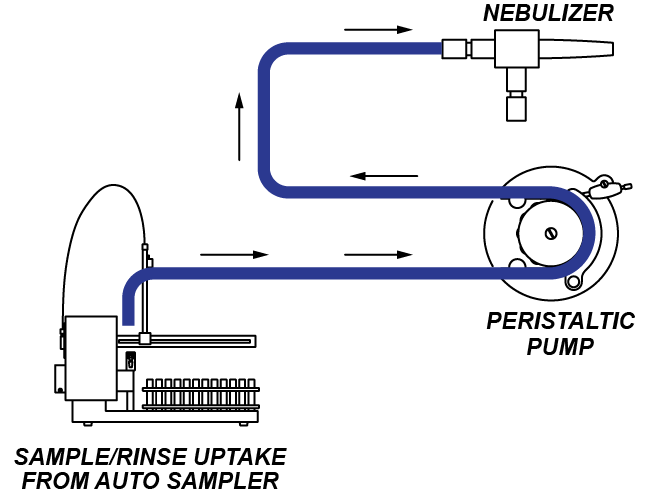
Analysis with Standard Setup
A standard analysis setup relies upon a single peristaltic pump to deliver both sample and rinse solution to the nebulizer, usually with a change in pump speeds (fast and analysis rates) to enable reasonable sample input, stabilization, and washout times.
Analysis with ASXpress® Plus Technology
The ASXpress® Plus utilizes a high-speed vacuum pump in addition to the ICP-OES or ICP-MS peristaltic pump. The 6-port valve allows the use of both pumps simultaneously, with significant reduction of total analysis time.
Load Position
>The vacuum pump rapidly fills the sample loop (green path), while the ICP-OES or ICP-MS peristaltic pump simultaneously transports carrier solution at a constant flow rate, keeping the ICP stable (red path).
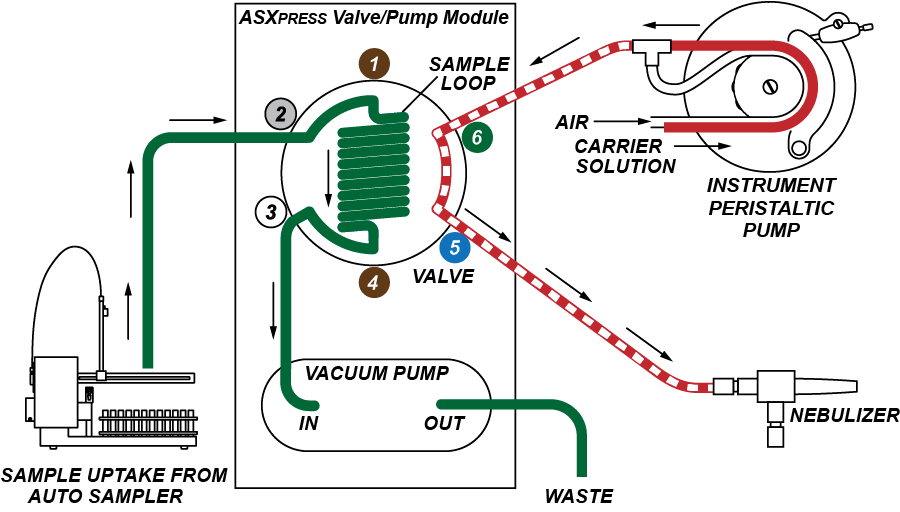
Inject/Rinse Position
The loaded sample is then directed into the nebulizer via the carrier solution flowing through the ICP-OES or ICP-MS peristaltic pump (red/green path). Simultaneously, the autosampler probe is moved to the rinse station and the uptake flow path (sample probe) is flushed with rinse solution (blue path) via the vacuum pump.
The Critical Role of Sample Injection in Laboratory Analysis
Sample injection precision directly impacts the success of ICP-OES and ICP-MS analysis. In modern analytical laboratories, the accuracy of sample introduction determines both the quality of results and overall laboratory efficiency. For facilities running high-throughput analyses, even small variations in sample injection can significantly affect data quality and operational costs.
Impact on Laboratory Results and Productivity
Precise sample injection systems like the ASXpress Plus ensure:
- Consistent analytical results across large sample sets
- Reliable quantitative measurements for regulatory compliance
- Reduced system maintenance and downtime
- Enhanced laboratory throughput without compromising accuracy
- Protection of sensitive ICP-OES and ICP-MS components
When integrated into ICP analysis workflows, automated sample injection systems help laboratories meet increasing demands for faster turnaround times while maintaining analytical precision. This is particularly crucial for applications in environmental monitoring, petrochemical analysis, and pharmaceutical quality control.