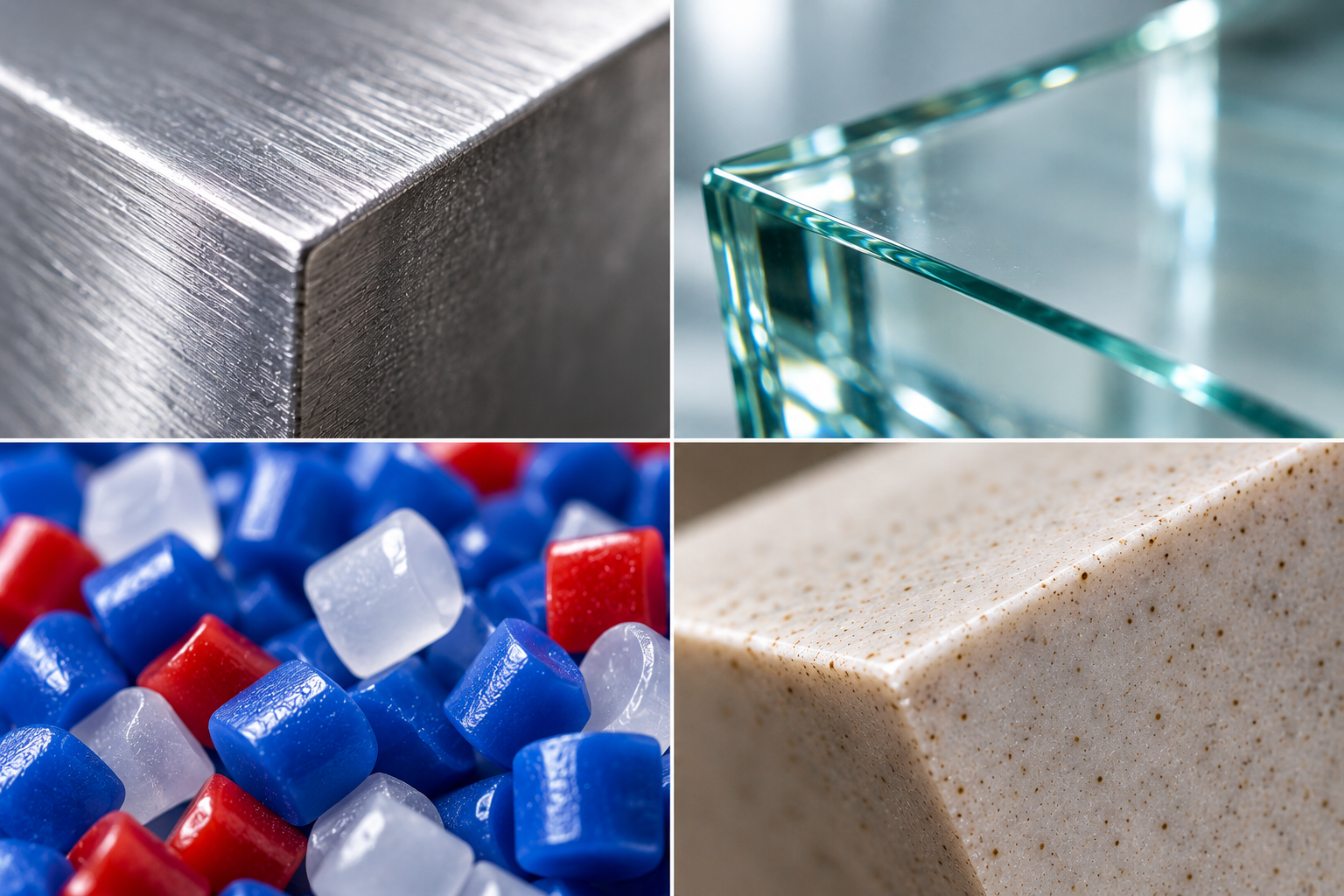
A metal spoon, a piece of glass, a plastic bottle, and a ceramic cup may look completely different—but all of them have something in common. They are made from specific materials and chemical elements that determine how they look, feel, and behave.
We cannot identify everything about a material just by looking at it. Scientists use analytical techniques to uncover the chemistry hidden inside everyday objects.
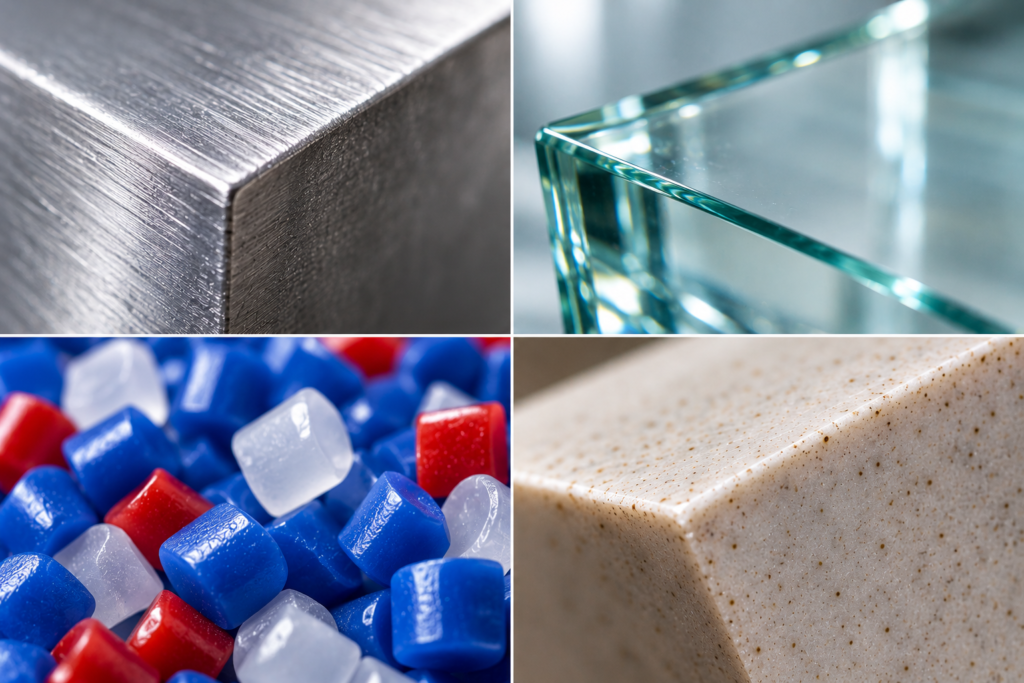
Everyday objects are made from materials with different chemical compositions and properties.
The material is made of:
Everything around us is made of matter, and that matter contains elements and chemical compounds. For example, metals can contain combinations of elements that give them particular properties. Glass contains different chemical components from steel, while plastics are made from long chains of molecules called polymers. Even materials that look similar can have different compositions. Knowing what is actually inside a material can help scientists understand why it behaves the way it does.
Why Does Composition Matter?
The elements present in a material can influence important properties such as:
- Strength
- Hardness
- Durability
- Corrosion resistance
- Heat resistance
- Electrical behavior
This is particularly important in manufacturing, where materials need to meet specific requirements. A small difference in composition can sometimes make a material behave differently from what is expected.
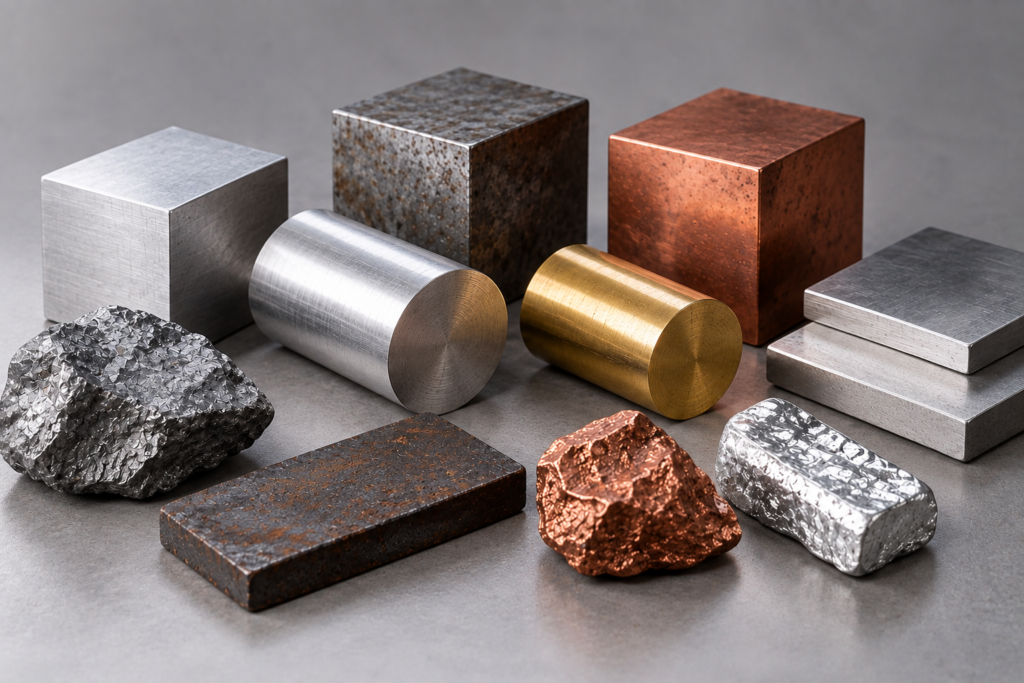
Materials that look similar can have different compositions and properties.
How Can Scientists See the Chemistry?
Scientists can use elemental analysis to determine which elements are present in a material.
One technique is X-ray fluorescence (XRF). The basic idea is simple: X-rays interact with a sample, causing it to produce characteristic fluorescent X-rays. These signals can then be measured to identify elements in the material.
In this way, the instrument provides information that cannot be obtained simply by looking at the sample.
From an Unknown Sample to Useful Information
Imagine receiving a metal sample without knowing exactly what it contains. Instead of relying only on its appearance, scientists can analyze it to determine its elemental composition.
This can help with questions such as:
• What is this material made of?
• Does it contain the expected elements?
• Does its composition meet the required specification?
• Are different samples actually made from the same material?
These measurements are useful in research, manufacturing, quality control, and material inspection.
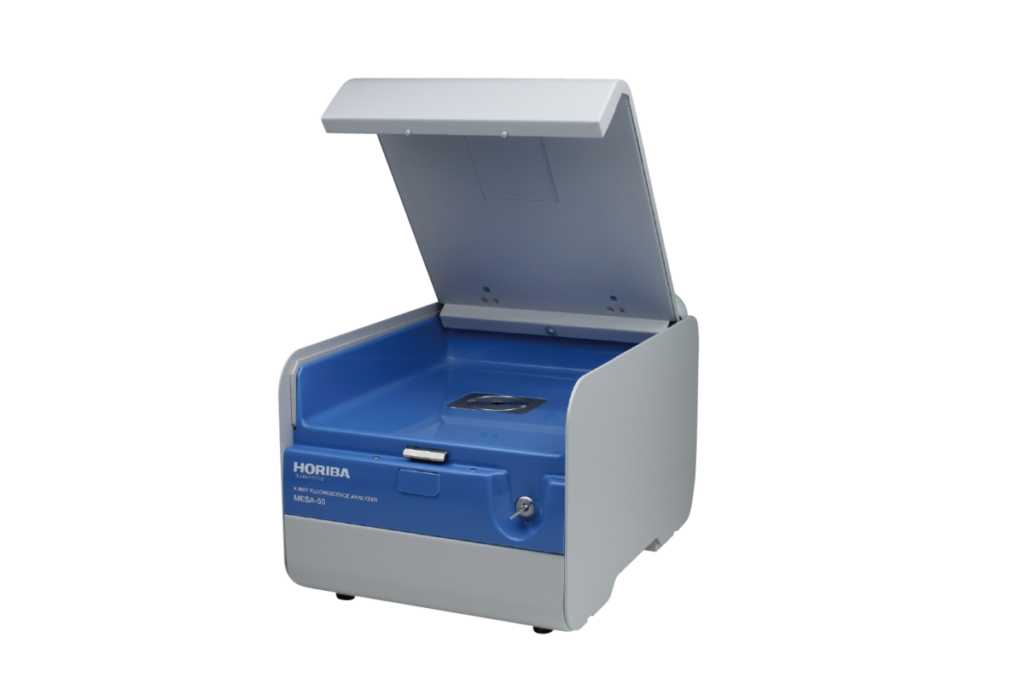
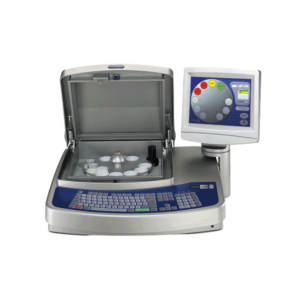
The HORIBA MESA-50 uses X-ray fluorescence to analyze the elemental composition of materials.
The HORIBA MESA-50, available through Sigmatech Inc. Website, is an XRF analyzer designed for applications including elemental analysis and coating evaluation.
Looking Beyond What We Can See
The chemistry of a material is often invisible, but its effects are everywhere. It determines why one material is strong while another is flexible, why one coating protects a surface, or why two products made to look identical can perform differently. Analytical instruments give scientists a way to look beyond appearance and obtain measurable information about the materials around us.
Everyday materials may look simple, but their properties come from the chemistry hidden inside them. By analyzing their elemental composition, scientists can better understand what materials are made of and how they are likely to behave.
HORIBA. (n.d.). What is X-ray fluorescence (XRF)? https://www.horiba.com/int/scientific/technologies/energy-dispersive-x-ray-fluorescence-ed-xrf/what-is-x-ray-fluorescence-xrf/
HORIBA. (n.d.). MESA-50 X-ray fluorescence analyzer. https://www.horiba.com/fra/scientific/products/detail/action/show/Product/mesa-50-1060/