Introduction
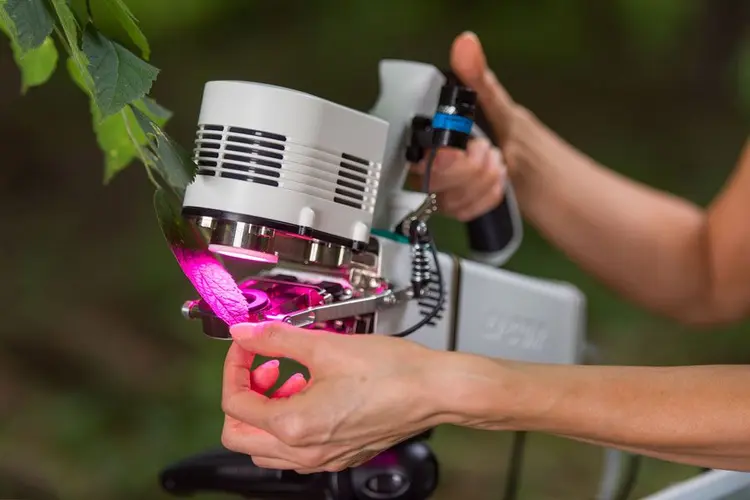
Photosynthesis is one of the most important biological processes on Earth. It allows plants to convert sunlight, carbon dioxide (CO₂), and water into energy while releasing oxygen into the atmosphere. For researchers, understanding how efficiently plants perform photosynthesis is essential for improving crop productivity, studying climate change, developing drought-resistant varieties, and monitoring ecosystem health.
Modern plant science goes beyond simply observing plant growth. Scientists now rely on precise measurements of gas exchange and environmental conditions to understand how plants respond to changing environments. This is where portable photosynthesis systems have become indispensable research tools.
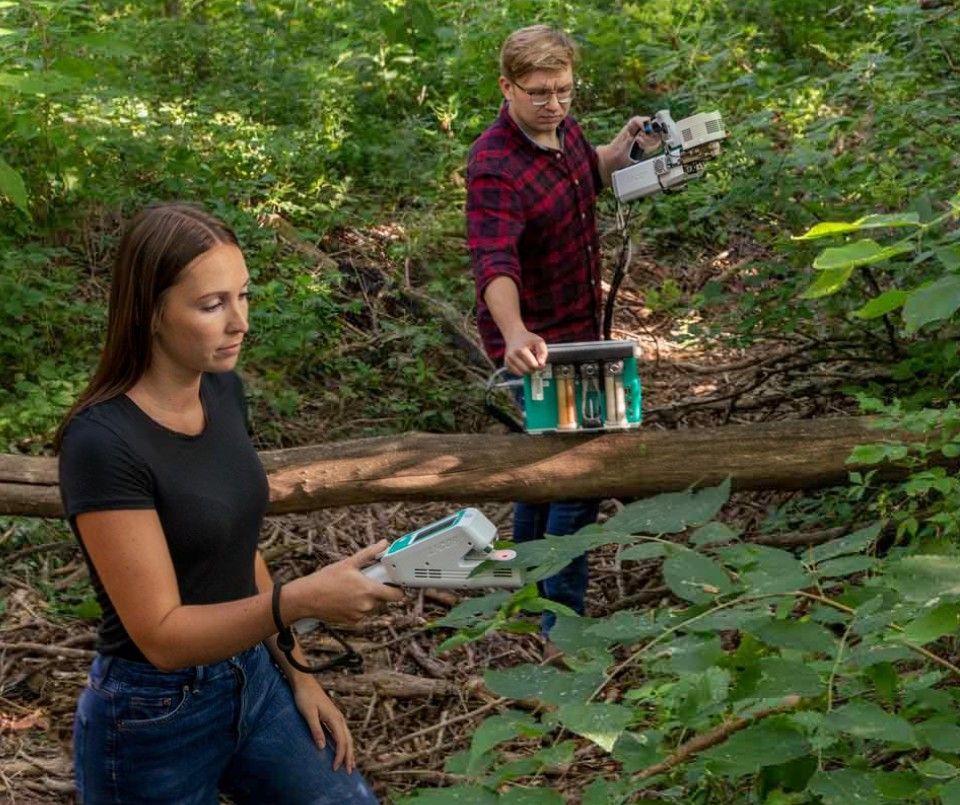
Researchers are using the LI-6800 Portable Photosynthesis System to measure photosynthesis under real environmental conditions.
What Is Photosynthesis Measurement?
Photosynthesis measurement is the process of quantifying how efficiently a plant converts light energy into chemical energy. Rather than estimating plant health visually, researchers directly measure physiological processes such as:
- Carbon dioxide (CO₂) assimilation
- Water vapor transpiration
- Stomatal conductance
- Internal leaf CO₂ concentration
- Leaf temperature
- Photosynthetically Active Radiation (PAR)
These measurements provide a comprehensive picture of a plant’s physiological performance under real environmental conditions.
Why Is Gas Exchange Important?
Gas exchange measurements help researchers determine how plants interact with their environment.
By measuring the movement of carbon dioxide into the leaf and water vapor out of the leaf, scientists can evaluate:
- Photosynthetic efficiency
- Water use efficiency
- Plant stress caused by drought or heat
- Nutrient deficiencies
- Crop productivity
- Climate adaptation
- Carbon cycling within ecosystems
This information supports research in agriculture, forestry, ecology, environmental science, and plant physiology.
Applications Across Different Industries
Agriculture
Researchers use photosynthesis measurements to identify crop varieties with higher yields, improved drought tolerance, and better water-use efficiency.
Environmental Research
Scientists monitor how forests, grasslands, and wetlands respond to climate change by measuring carbon uptake and ecosystem productivity.
Universities and Research Institutions
Portable photosynthesis systems are widely used for plant physiology experiments, graduate research, and teaching laboratories.
Greenhouse and Controlled Environment Studies
Researchers evaluate the effects of lighting, irrigation, fertilizers, and carbon dioxide enrichment on plant growth.
Why Researchers Choose LI-COR
LI-COR has become one of the world’s leading manufacturers of portable photosynthesis systems. Its instruments are designed to provide accurate, repeatable, and real-time measurements in both laboratory and field environments.
Key advantages include:
- High-precision infrared gas analyzers
- Simultaneous measurement of photosynthesis and transpiration
- Portable field-ready design
- Environmental control of light, humidity, temperature, and CO₂
- Fast data acquisition
- Comprehensive software for analysis and reporting
These capabilities allow researchers to collect reliable physiological data while minimizing experimental error.
Supporting Better Plant Science
As global challenges such as food security and climate change continue to grow, accurate plant measurements are becoming increasingly important. Reliable gas exchange analysis enables scientists to understand plant responses at a physiological level, leading to improved crop management strategies, more sustainable agricultural practices, and better environmental stewardship.
Whether studying crop performance, ecosystem dynamics, or plant stress responses, portable photosynthesis systems provide the data needed to make informed scientific decisions.
Conclusion
Photosynthesis measurement is far more than a laboratory procedure—it is a powerful tool for understanding how plants function in a changing world. By combining advanced gas exchange technology with accurate environmental measurements, researchers can gain valuable insights into plant productivity, resource efficiency, and ecosystem health.
For laboratories, universities, agricultural researchers, and environmental scientists seeking reliable and precise plant physiology measurements, LI-COR portable photosynthesis systems remain one of the industry’s most trusted solutions.
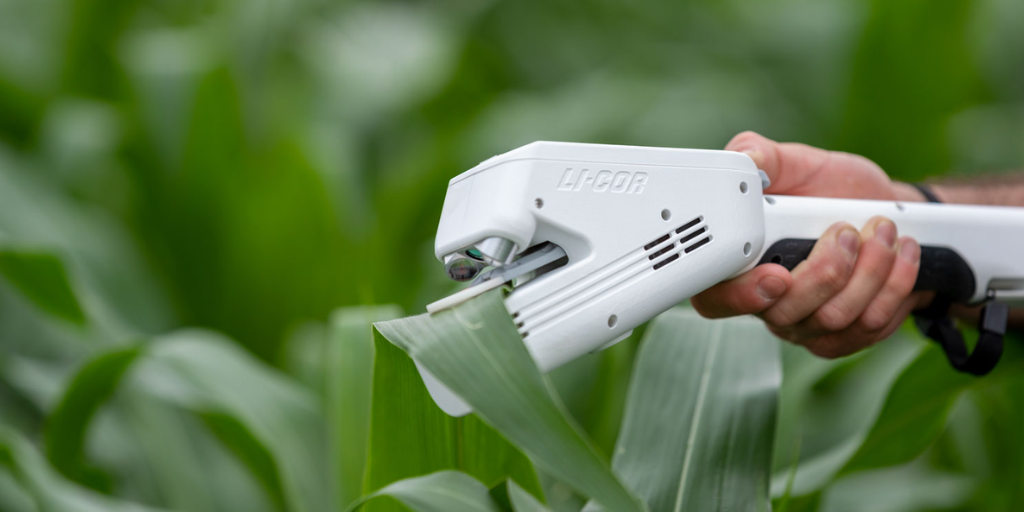
LI-COR Biosciences. (n.d.). LI-6800 portable photosynthesis system. LI-COR Environmental.
If you’re interested in the Li-6800 portable photosynthesis system or looking for further information, please get in touch and a member of our team will be happy to assist.