Mercury is a highly toxic element that poses severe risks to human health, laboratory safety, and the environment. Even at trace concentrations, exposure can cause permanent neurological damage, respiratory harm, and long-term environmental contamination. For laboratories, research institutions, and industrial facilities, accurate mercury measurement is not optional — it is essential.
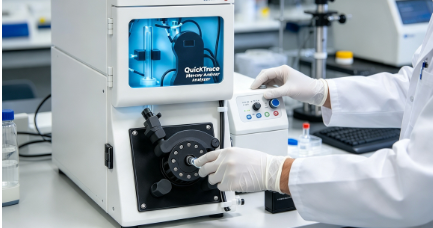
Bess Scientific supplies high-performance mercury analyzers that enable precise detection and quantification of mercury in air, water, soil, and solid samples. These instruments help protect personnel, meet regulatory standards, and deliver trustworthy analytical results. Below is a comprehensive overview of why mercury analyzers are indispensable and how our different models meet specific laboratory requirements.
Understanding the Risks of Mercury
Mercury occurs in elemental, inorganic, and organic forms — all are hazardous. In the laboratory setting, exposure most commonly happens through mercury vapour inhalation or contact with contaminated samples. Because mercury is colourless and odourless, leaks and contamination often go unnoticed without proper instrumentation.
Key risks include:
- Chronic health effects from low-level, long-term exposure
- Undetected vapour leaks accumulating in confined workspaces
- Environmental contamination via wastewater discharge or airborne emissions
These hazards make reliable monitoring equipment a fundamental part of any laboratory safety infrastructure.
What Is a Mercury Analyzer?
A mercury analyzer is a dedicated analytical instrument engineered to measure mercury concentrations with exceptional sensitivity and accuracy. Modern systems rely on two proven detection technologies:
- Cold Vapour Atomic Absorption (CVAA) — delivers reliable, cost-effective detection down to parts-per-billion (ppb) levels
- Cold Vapour Atomic Fluorescence (CVAF) — achieves ultra-trace detection at parts-per-trillion (ppt) levels, offering superior sensitivity for demanding applications
Both methods eliminate the need for complex sample preparation and provide rapid, reproducible results — critical for environmental monitoring, industrial quality control, and academic research.
Why Mercury Analyzers Are Indispensable
Laboratory Safety
Early detection of mercury vapour and contamination reduces occupational exposure risks, enabling proactive safety management and protecting staff health.
Regulatory Compliance
Environmental and occupational safety standards mandate strict mercury limits. Accurate measurement ensures your laboratory stays compliant and audit-ready.
Research Integrity
In scientific studies involving mercury, precise data is foundational. Reliable measurement prevents compromised results and supports publication-quality data.
Environmental Stewardship
Accurate monitoring underpins effective pollution control, remediation efforts, and environmental protection initiatives.
Model Comparison: Which Solution Fits Your Laboratory?
Table
| Model | Technology | Key Advantages | Primary Applications |
|---|---|---|---|
| QuickTrace® M–7600 | Cold Vapour Atomic Absorption (CVAA) | • High sensitivity for trace mercury detection• Compact and laboratory-friendly design• Fast analysis time improves workflow efficiency• Cost-effective solution for routine testing | • Environmental monitoring• Academic and research laboratories• Routine compliance testing |
| QuickTrace® M-8000 | Cold Vapour Atomic Fluorescence (CVAF) | • Extremely low detection limits• Higher sensitivity compared to CVAA systems• Excellent for ultra-trace mercury analysis• Suitable for advanced research requirements | • High-level research laboratories• Ultra-trace environmental analysis• Regulatory and reference laboratories |
QuickTrace M-8000 is the gold standard when your work demands the lowest possible detection limits and highest analytical confidence — such as ultra-trace water testing or atmospheric mercury studies.
Selecting the Right Instrument
Choosing the correct mercury analyzer ensures optimal performance and value. Consider:
- Required detection limits — ppb vs. ppt levels
- Sample matrices — liquids only, or solids, soils, and gases too
- Throughput & workflow — daily sample volume and turnaround time needs
- Regulatory requirements — specific methods or detection thresholds you must meet
Our team can guide you to the model that best matches your applications, budget, and future testing needs.
Supporting Quality and Accreditation
A mercury analyzer is more than a measurement tool — it strengthens your laboratory’s quality management system by:
- Supporting ISO 17025, GLP, and other accreditation requirements
- Enabling method validation and verification
- Providing consistent, traceable quality control data
- Documenting results for audits and inspections
Reliable mercury measurement builds credibility and ensures your laboratory maintains the highest professional standards.
Long-Term Value & Cost Efficiency
While a mercury analyzer represents a capital investment, it delivers substantial ongoing returns:
- Minimised health and liability risks
- Avoided non-compliance penalties and shutdowns
- Confident, defensible data that reduces re-testing
- Protected high-value equipment from mercury contamination
The right instrument pays for itself through operational confidence, safety assurance, and data reliability over its service life.
Conclusion
Mercury analyzers are indispensable instruments for any laboratory that handles mercury or conducts environmental testing. They protect your team, ensure regulatory compliance, and deliver the accurate data that your work depends on. With two distinct models available — from routine liquid analysis through to ultra-trace research-grade systems — there is a solution to match every requirement and budget.