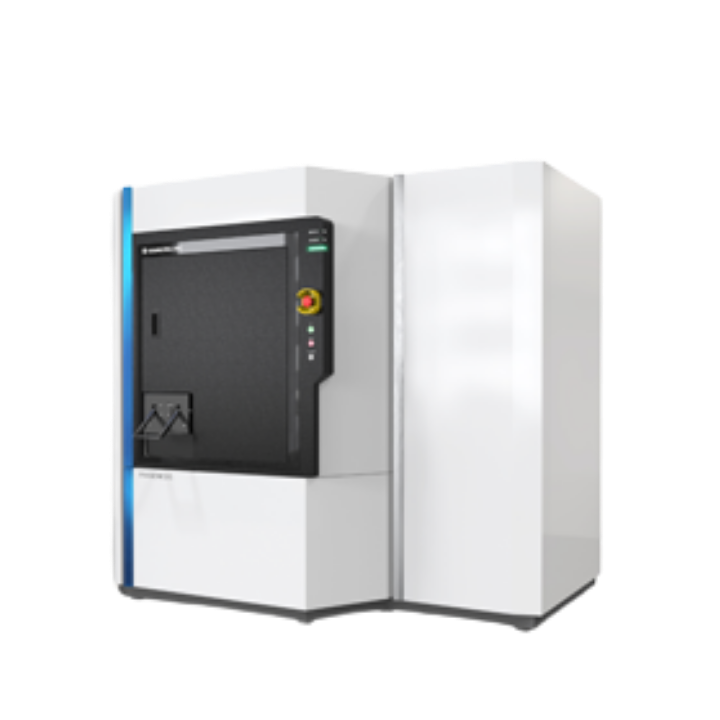
ULVAC-PHI integrates every surface analysis technology which is essential for battery research and development into an advanced automated platform to contribute to battery performance and longevity through thin film and interface characterizations.

ULVAC-PHI integrates every surface analysis technology which is essential for battery research and development into an advanced automated platform to contribute to battery performance and longevity through thin film and interface characterizations.

[Background]

Advanced materials such as all-solid-state batteries, advanced semiconductors, and artificial photosynthesis are complex combinations of materials, and their research and development require speed in optimizing the performance of each material as well as the combination of materials. There is a growing need for high-performance and highly functional surface and interface analysis that can dramatically accelerate such research and development. ULVAC-PHI begins offering a new surface analysis system that not only offers extremely high basic performance but also a high degree of automation to meet the various individual requirements of worldwide customers. The solution is the new “PHI GENESIS” scanning X-ray photoelectron spectrometer (XPS) from ULVAC-PHI.

[Summary]

The “PHI GENESIS” XPS is a new product that combines the core “GENE” of the PHI surface analysis instruments, which has a 50-year tradition of advanced automation and reduced analysis time, with expandability, and offers overwhelming basic performance in a compact housing.

The “PHI GENESIS” XPS provides high-speed, high-sensitivity, and overwhelming micro XPS analysis performance with automated multi-sample analysis with automatic sample exchange. A high-sensitivity analyzer with an improved counting rate also contributes to high performance. To date, ULVAC-PHI and Physical Electronics USA, a subsidiary of ULVAC-PHI, have developed various world-first XPS analysis technologies including scanning micro XPS and HAXPES (hard x-ray photoelectron spectroscopy), fully automated robotics XPS analysis, full-automatic insulator neutralization analysis, depth profiling of organic materials using cluster etching ion gun. All of these technologies are incorporated into a single instrument, making it possible to provide state-of-the-art XPS analysis technology for all kinds of materials, including metals, semiconductors, ceramics, and organic materials.

Another novel feature of PHI GENESIS is a new software package designed for ease of use and designed for all levels of users, from surface analysis beginners to well-trained scientists, from manufacturing to cutting-edge research and development. We have also prepared several options that allow customers to perform advanced analyses that previously required sophisticated analytical equipment such as a large synchrotron in a typical laboratory environment.

PHI GENESIS is fully compatible with the analysis of today’s most advanced composite solid materials and composite solid devices and aims to dominate the global market as an indispensable analytical instrument for speeding up research and development.

Related Products

The AFM100 Series is Hitachi’s next generation probe microscopy platform.
The Quorum K975X Turbo-Pumped Thermal Evaporator is a high vacuum evaporator for TEM, SEM and thin film applications.
The K850 combines versatility and ease of operation. Built-in thermo-electric heating and adiabatic cooling allow precise temperature control.
The FlexSEM 1000 II VP-SEM combines innovative technological features with an intuitive interface, to deliver adaptability and flexibility in a powerful, automated, lab-friendly package.
The iPHEMOS-MPX is a high-resolution Inverted Emission Microscope that pinpoints failure locations in semiconductor devices by detecting the weak light emissions and heat emissions caused by defects.
DSC is used to measure heat flow for material characterization by providing thermal properties such as melting point, glass transition and crystallization.
The only scanning Auger nanoprobe in the world that guarantees a field emission electron source whose spatial resolution is 8 nm or less.
Solution for the review of defects of semiconductor integrated circuit detected by AOI/AVI at front end processing, helps to eliminate false defects and increase overall yield.

Product added to Quote list ✔

failure analysis, material characterization, and metrology equipment

Subscribe to newsletter

Sign up for our newsletter to get updates on promos, seminars, events, products, application notes and more.

Inquire for this Product

PHI GENESIS
Fully-automated multi-technique scanning XPS/HAXPES
PHI GENESIS
Fully-automated multi-technique scanning XPS/HAXPES